
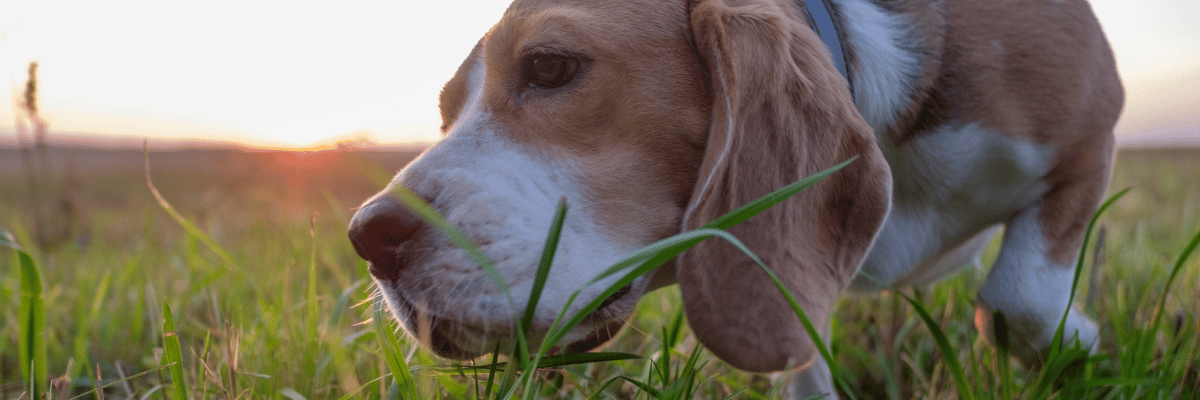
Dog grass eating is a common behavior that often surprises pet owners, but in most cases it is normal and harmless. Dogs may eat grass for several reasons, including curiosity, boredom, fiber needs, instinct, or simply because they enjoy the taste and texture. While the old myth says dogs eat grass to make themselves vomit, research suggests that is not usually the main reason.
Still, the behavior can mean different things depending on the dog. Some dogs do it occasionally and seem perfectly fine afterward, while others may do it often or alongside vomiting, stomach upset, or other changes in behavior. Understanding the reasons behind it can help you know when to relax and when to pay attention.
The most common reasons
There isn’t just one reason dogs eat grass. Veterinary sources point to several possible explanations, including instinct, boredom, anxiety, digestion, fiber needs, and simple taste or texture preference. For many dogs, grass is just something interesting to chew on when it’s available.
Some dogs may eat grass because they like the feel of it or because they enjoy being outside and exploring with their mouths. Others may graze when they are under-stimulated, left alone, or looking for something to do. In some cases, grass may also offer roughage, which can support digestion and bowel movements.
The vomiting myth
A common belief is that dogs eat grass to make themselves vomit. That idea is widespread, but available research suggests it is not the main reason most dogs do it. One veterinary source notes that fewer than 25% of dogs vomit after eating grass, and only about 10% show signs of illness before doing so.
That means grass-eating is usually not a deliberate form of self-treatment. Some dogs may eat grass when they already feel unwell, but for many, the behavior appears to be normal rather than medical. In other words, the grass is often the habit, not the cure.
Is it safe?
For most dogs, eating a little grass now and then is harmless. The bigger concern is not the grass itself, but what may be on it. Pesticides, fertilizers, herbicides, animal waste, and parasites can all create risk.
If your dog only takes a few bites and stays normal, there is usually no need to panic. But if the behavior is frequent, frantic, or followed by sickness, it should be taken more seriously.
When to call the vet
You should contact your vet if your dog is eating grass and also showing vomiting, diarrhea, lethargy, loss of appetite, belly pain, or signs of distress. A sudden increase in grass-eating can also be worth discussing, especially if it seems compulsive or out of character.
Grass-eating may also point to an underlying issue such as gastrointestinal discomfort, nutrient imbalance, or pica, which is the tendency to eat non-food items. These cases are less common, but they matter because they may need medical attention.
What you can do
If your dog eats grass because of boredom or anxiety, more exercise, training, and mental enrichment can help. If it seems linked to hunger or digestion, talk to your vet about whether your dog’s diet needs adjustment, especially fiber content. Positive redirection also works well for many dogs, especially when they start grazing in a favorite spot.
A practical approach is to watch the pattern. Occasional grazing during a walk is usually normal, but repeated eating of large amounts, grass swallowing followed by vomiting, or signs of illness mean something more may be going on. Paying attention to context is the key.
A simple takeaway
Dogs eat grass for many reasons, and most of them are not alarming. It may be instinct, boredom, curiosity, digestion, or just a sensory habit. The important part is to look at the whole picture instead of assuming grass-eating always means a sick dog.
Leave a Reply